


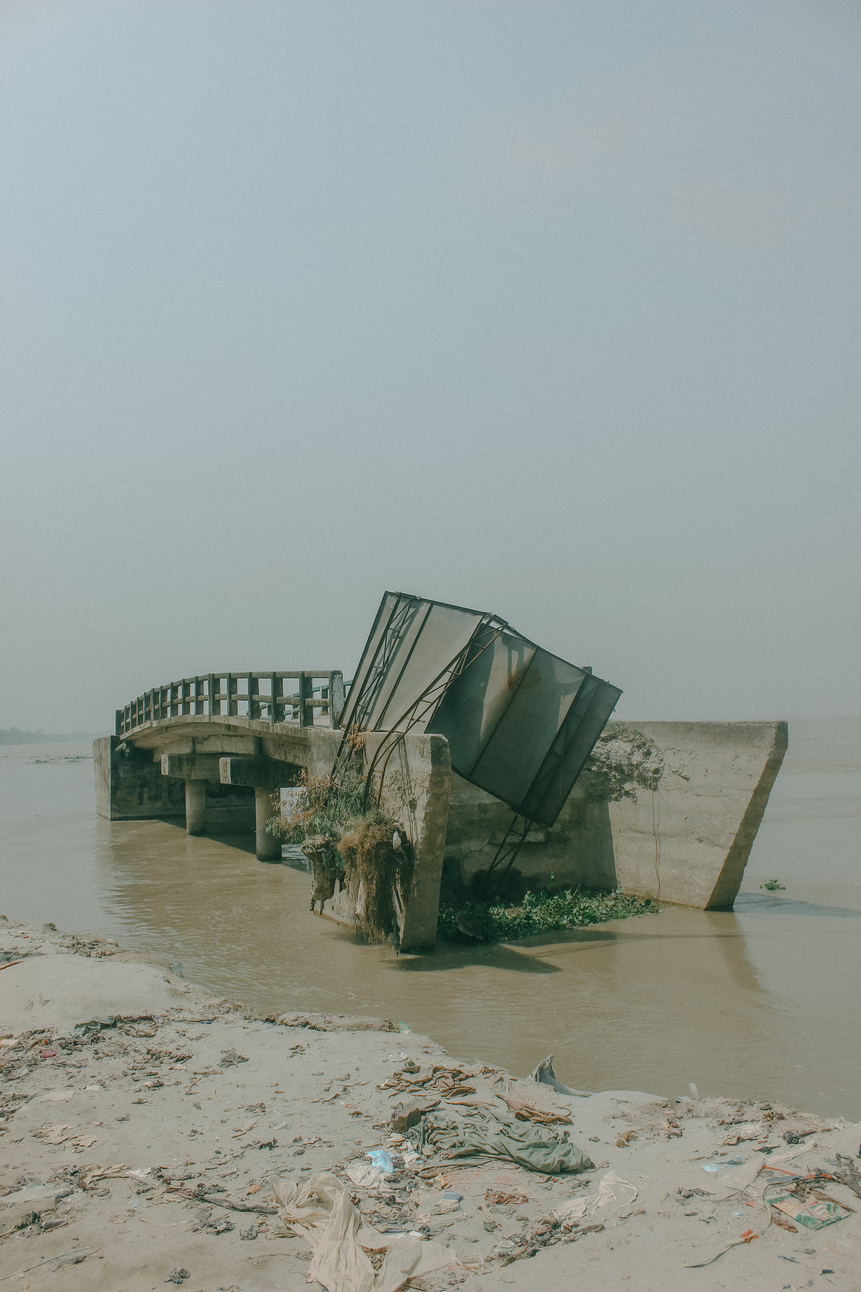
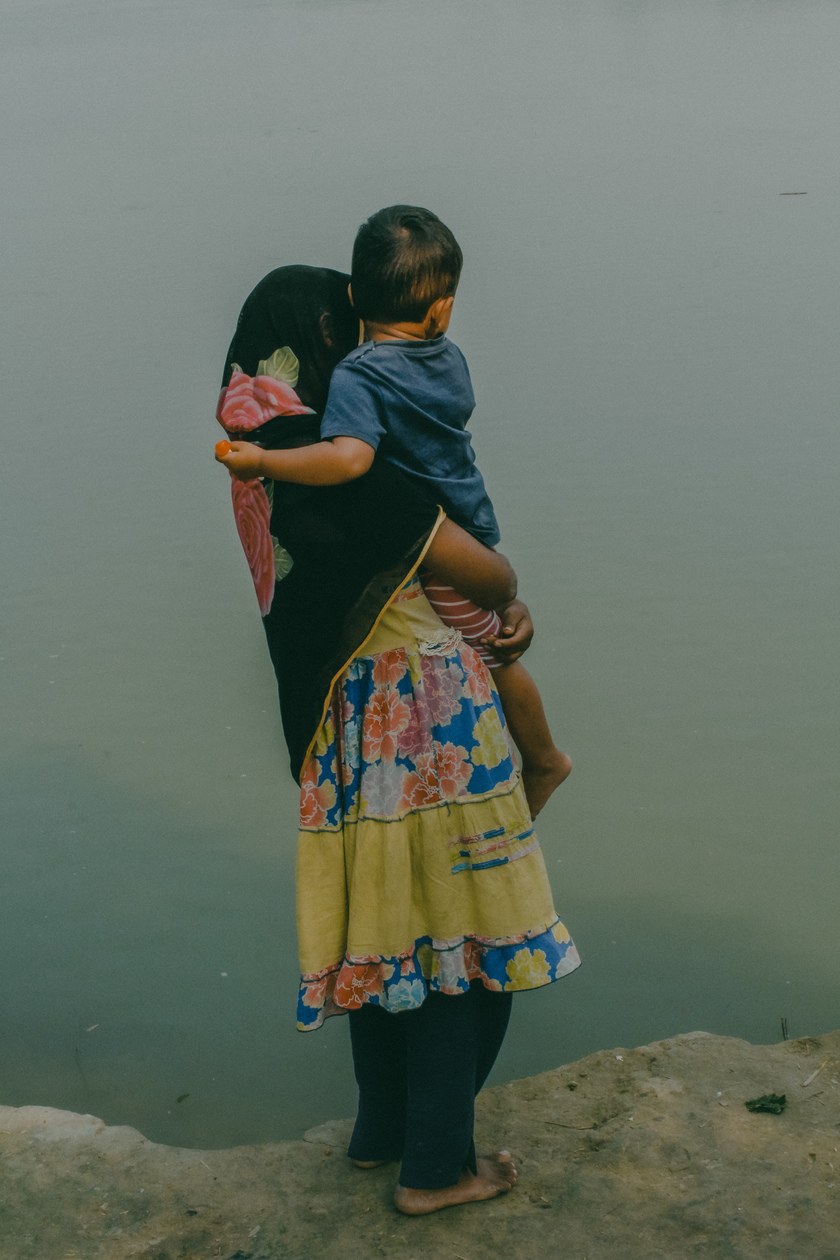


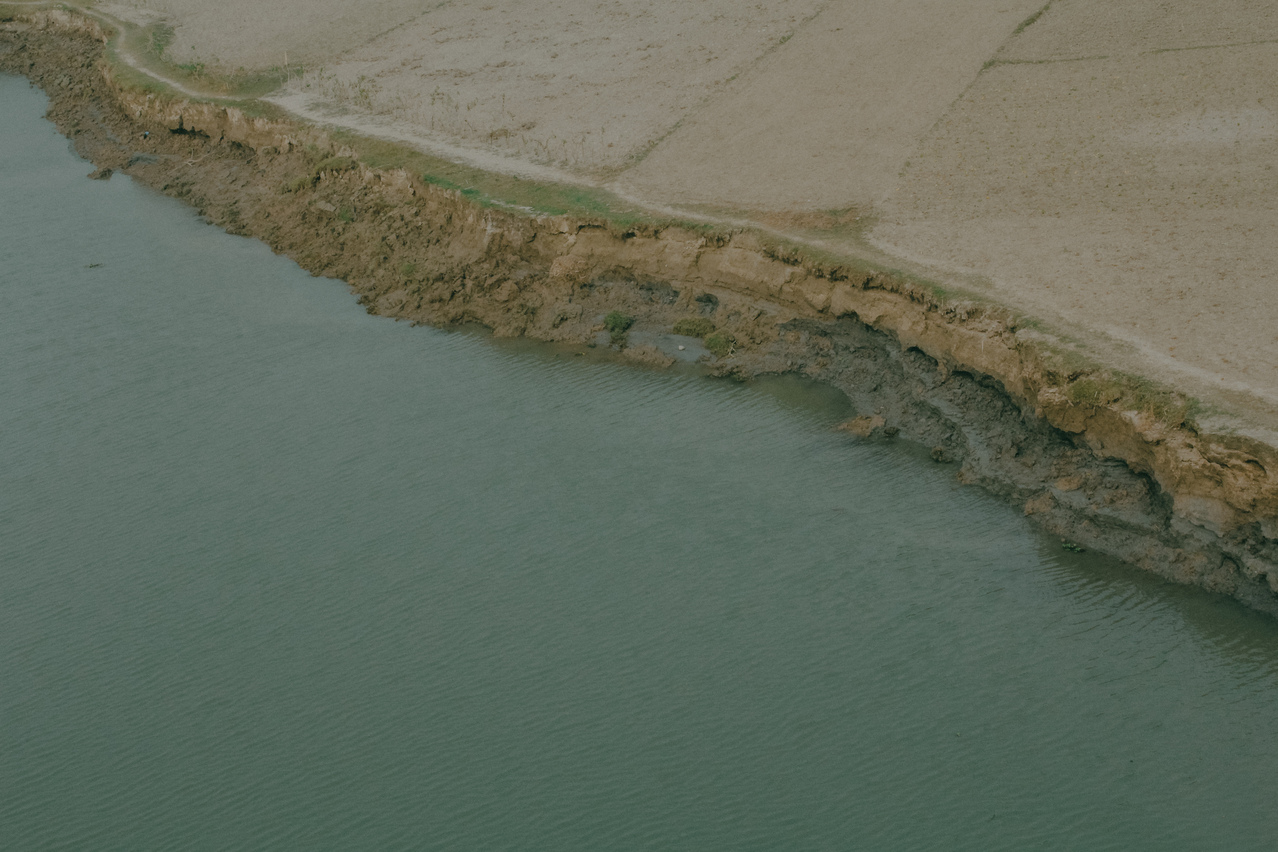
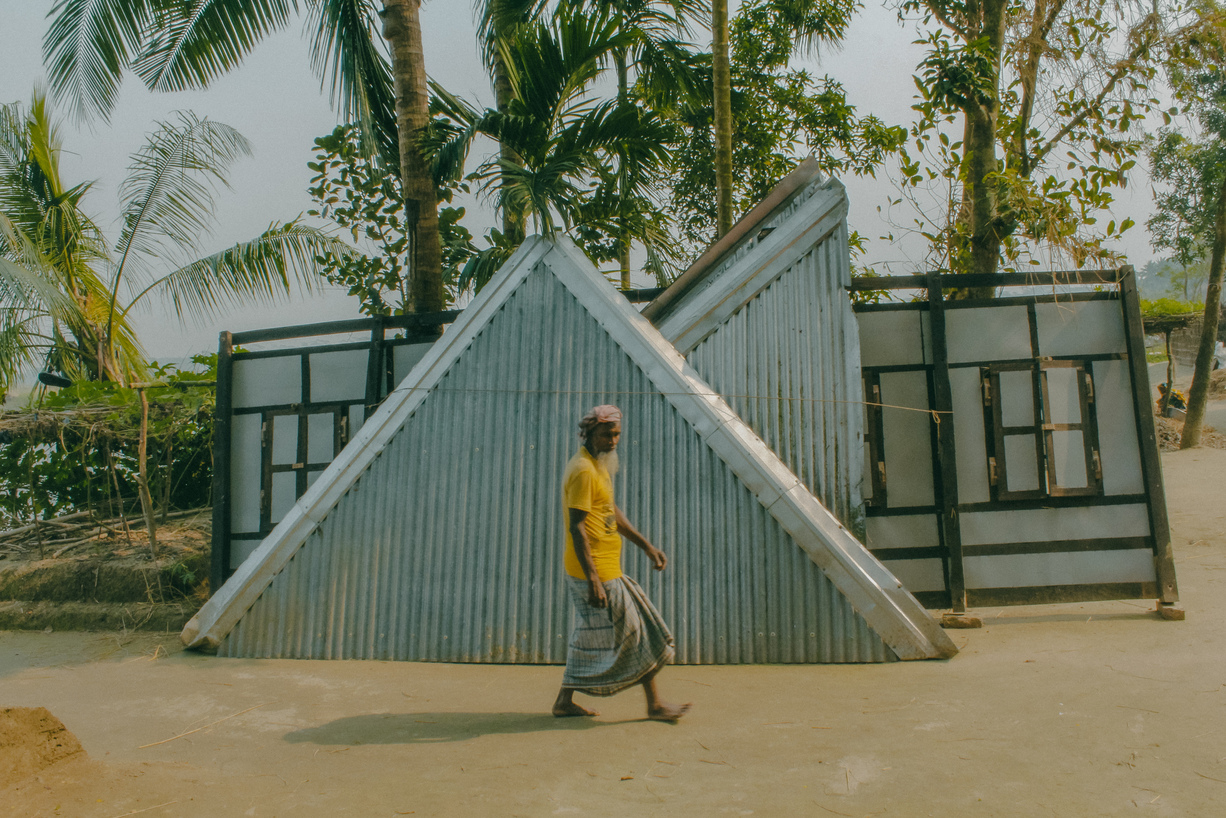
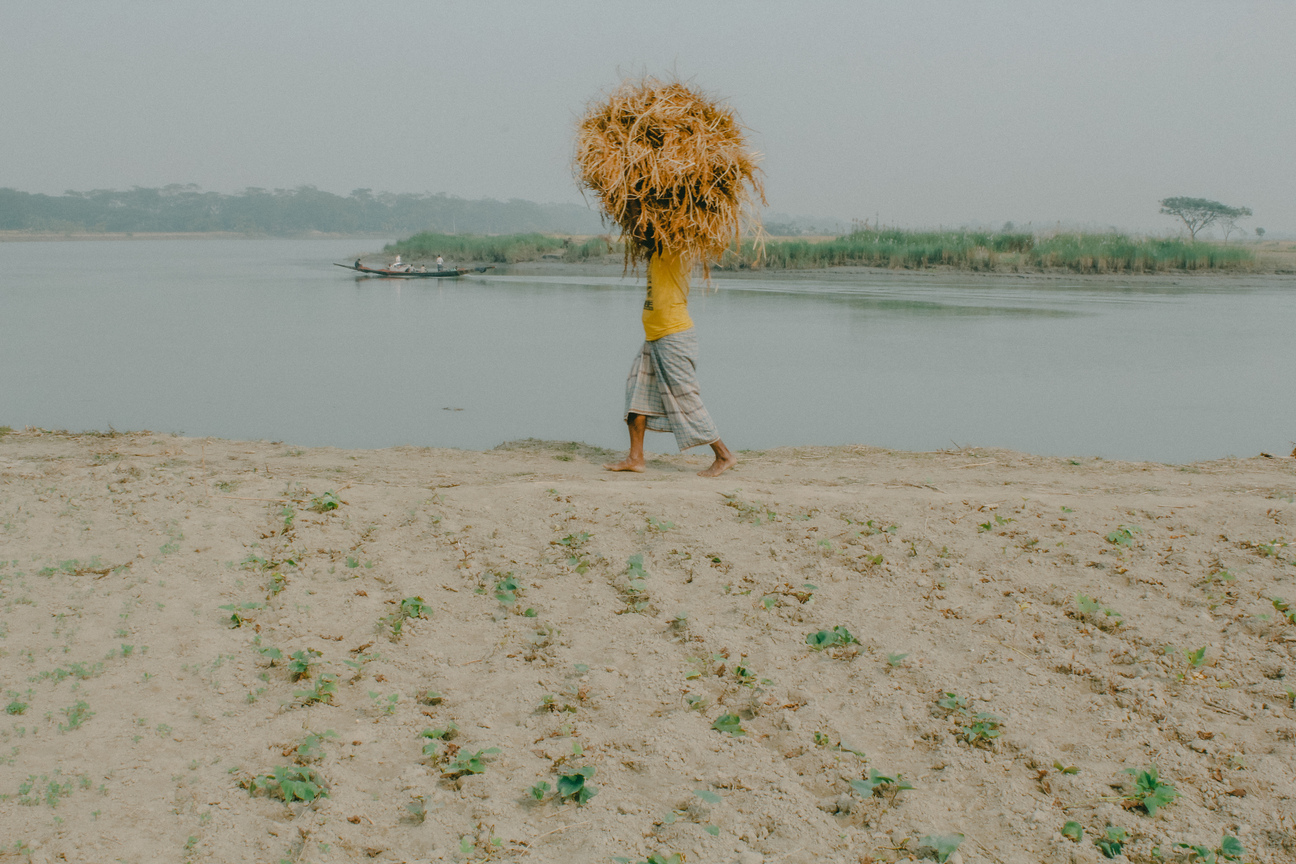
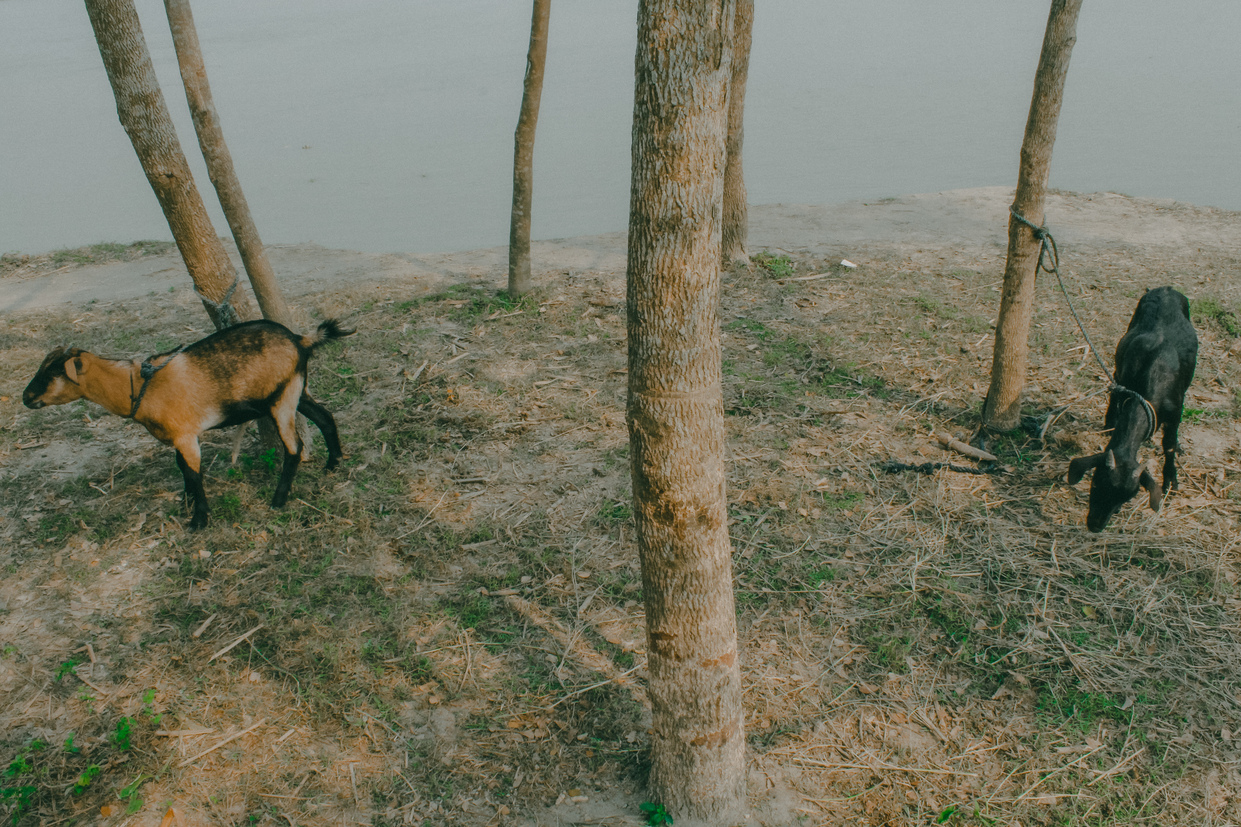

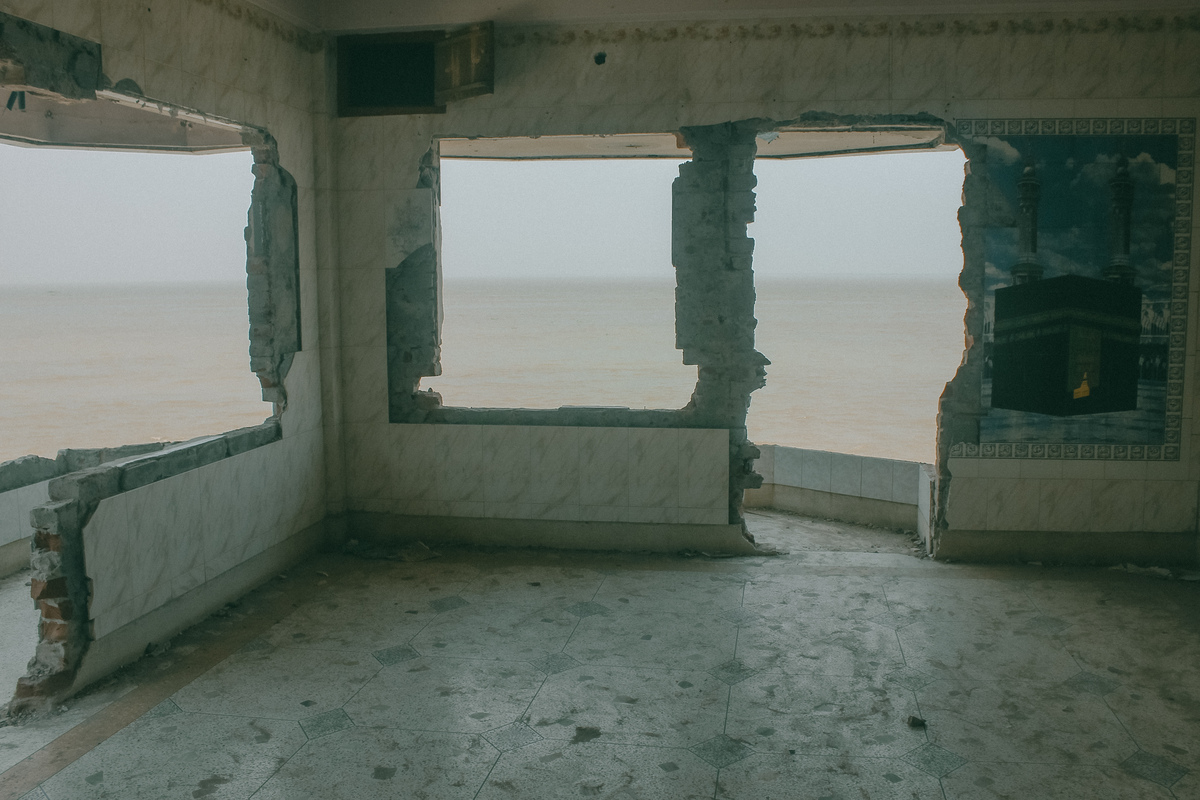

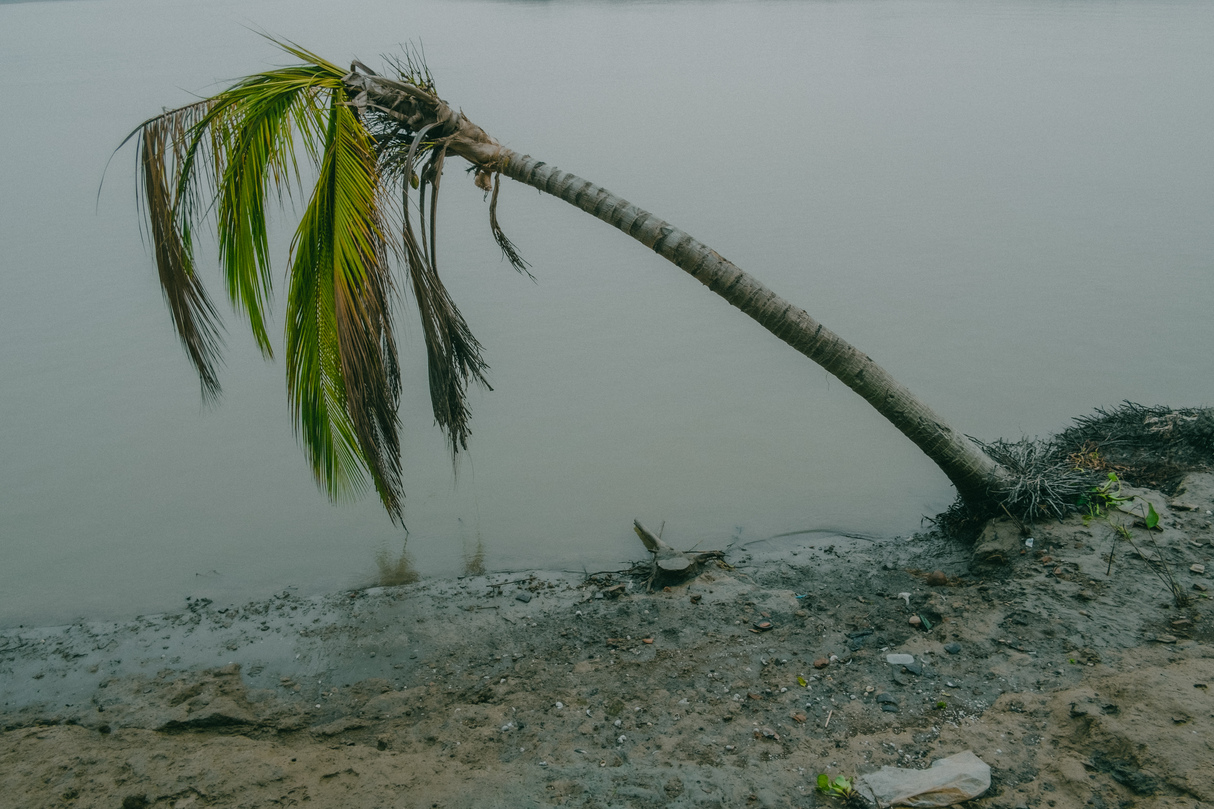

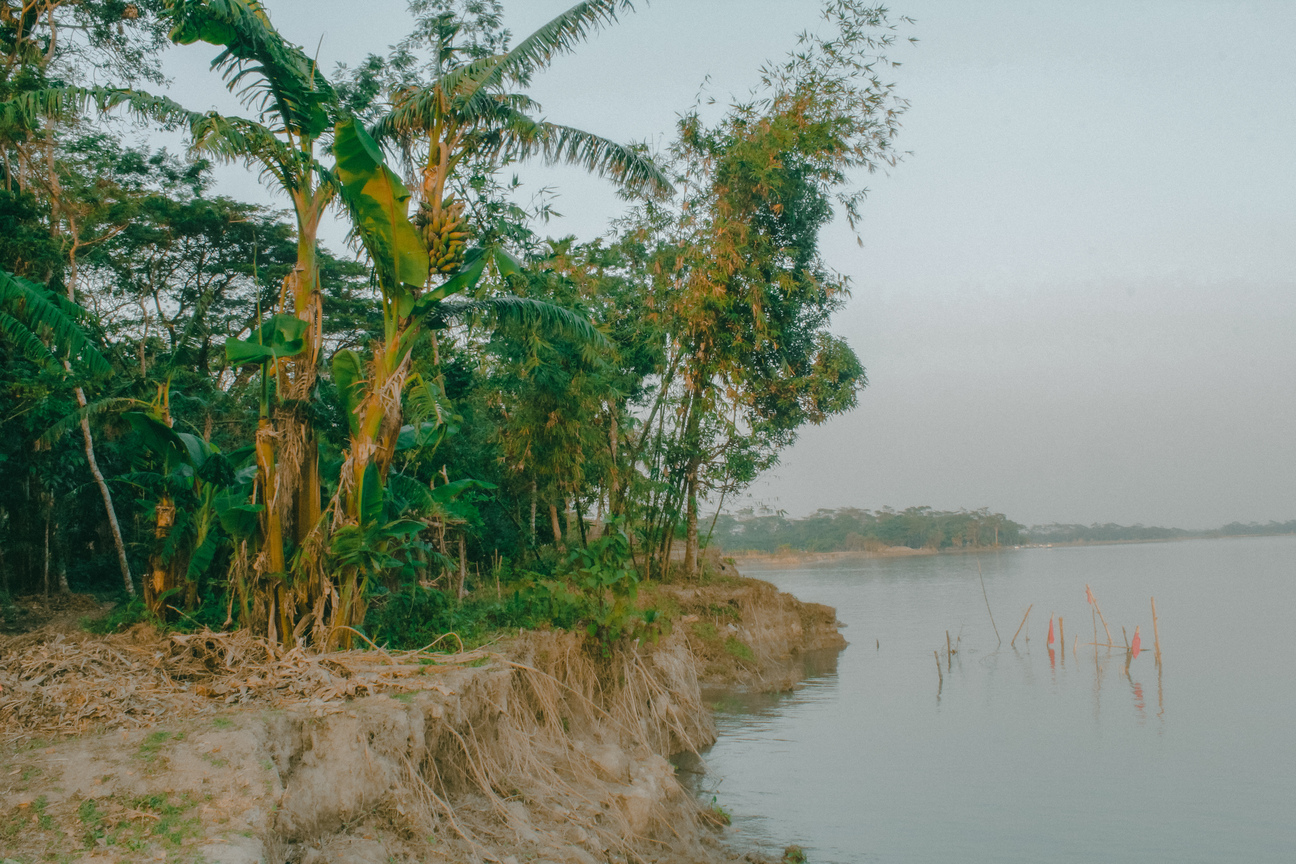
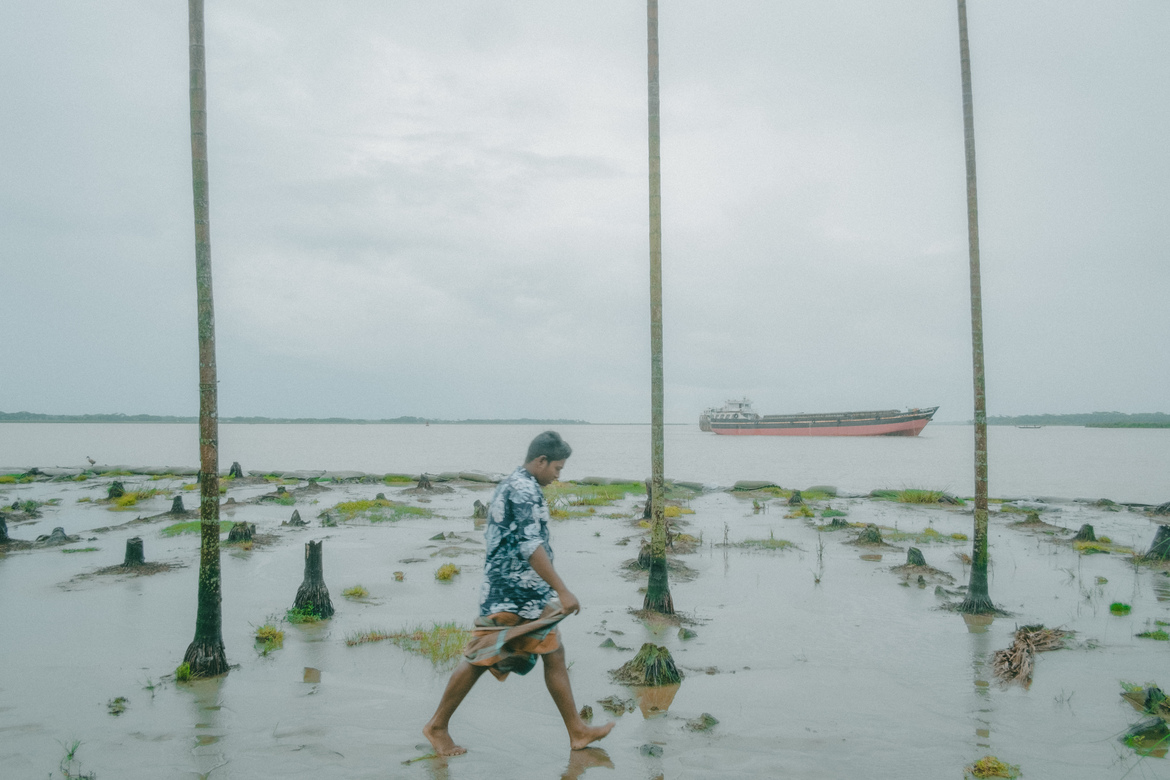
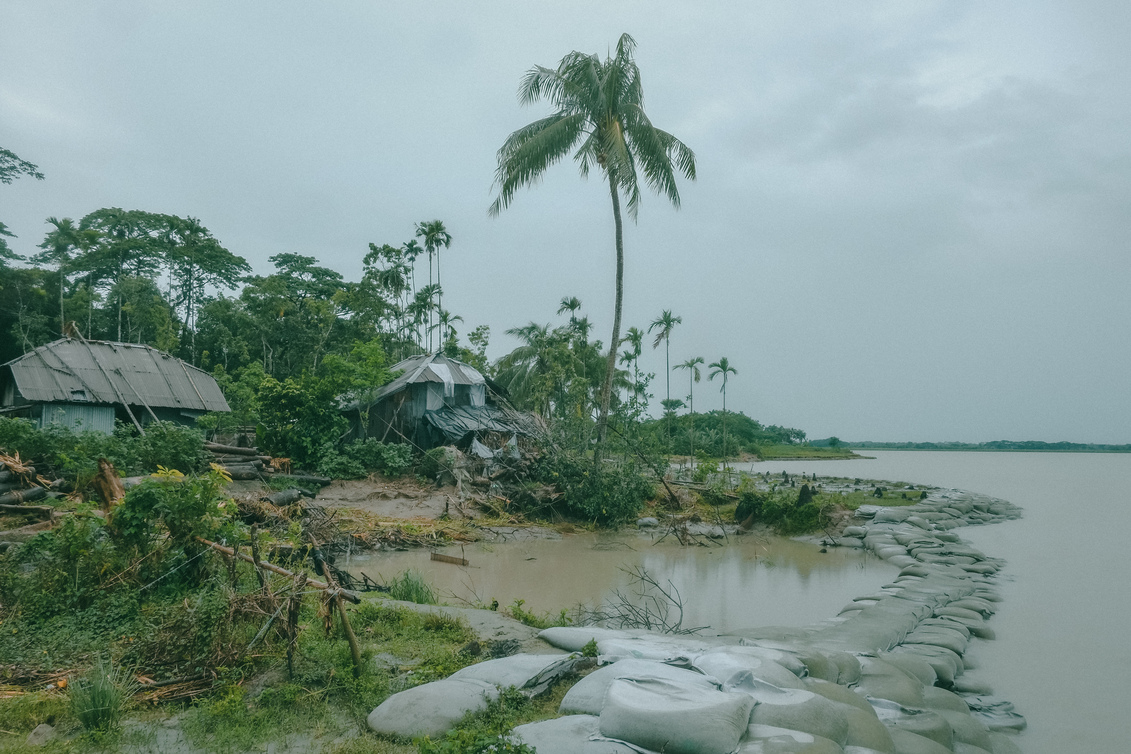


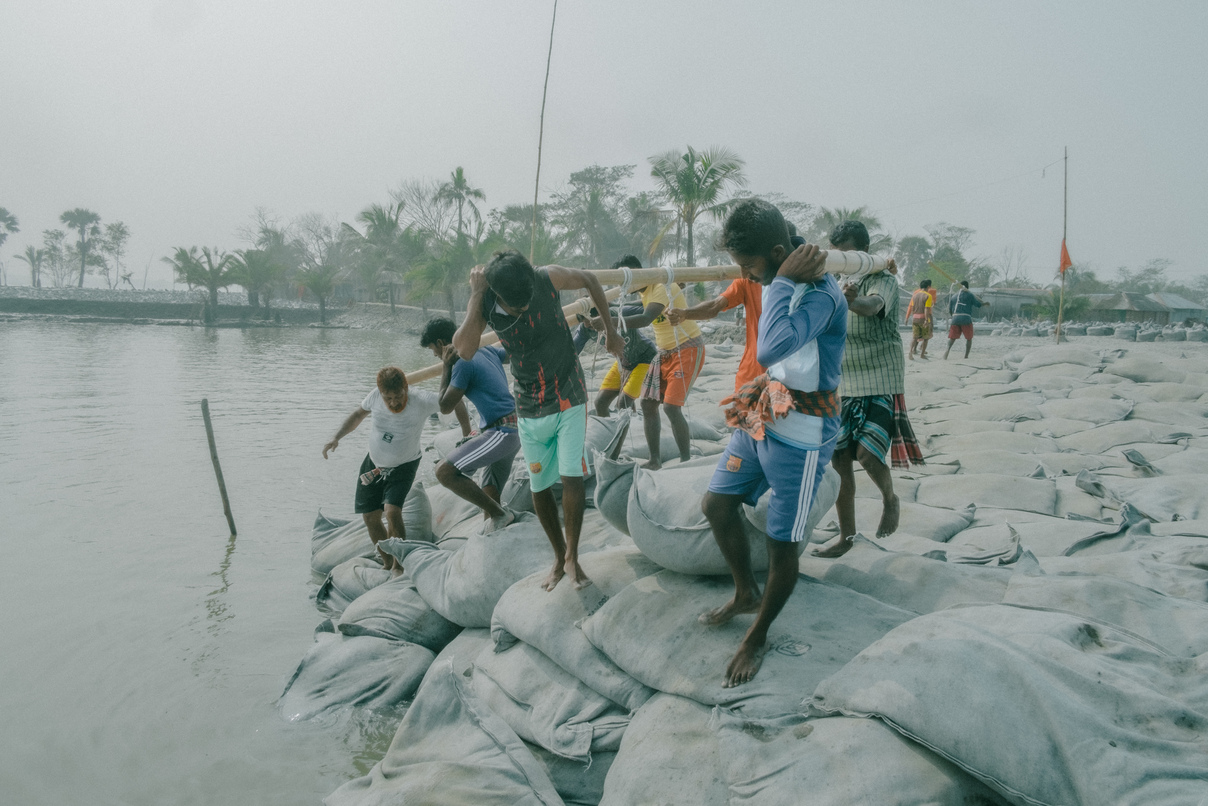
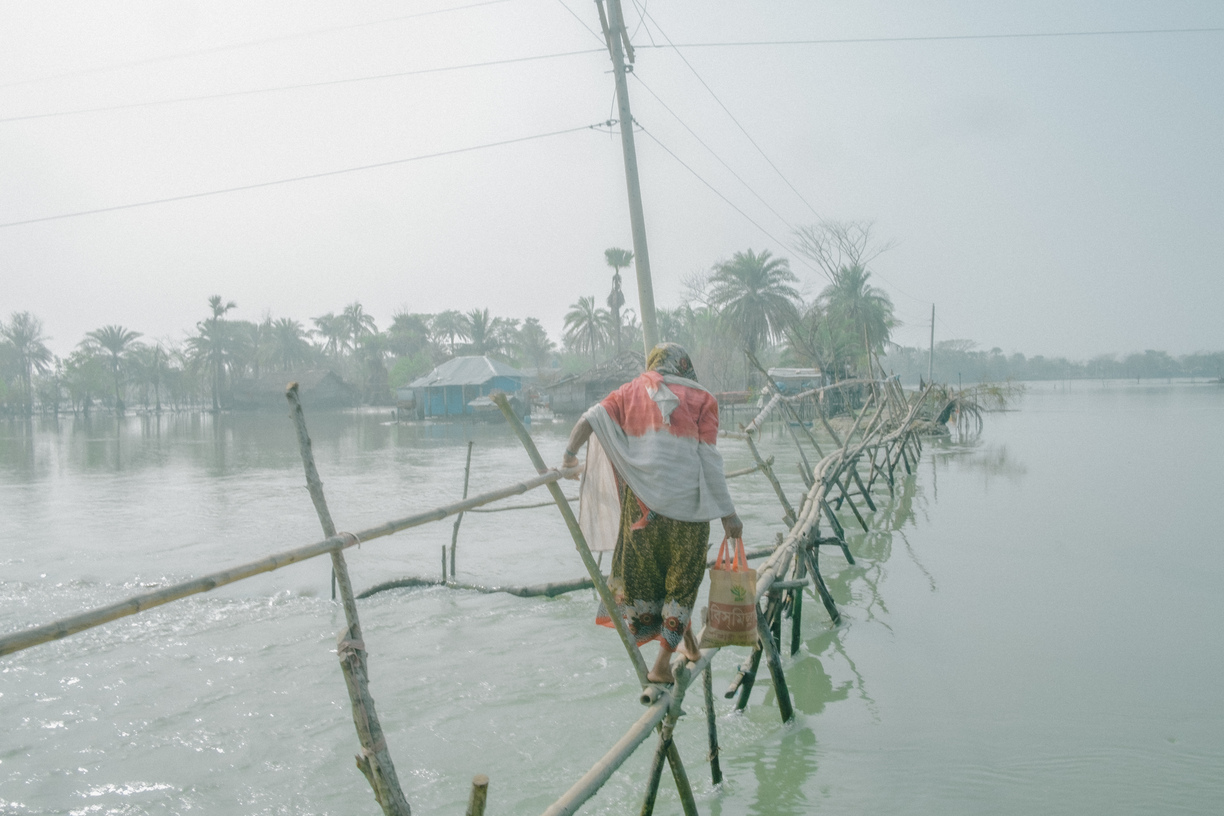

Across riverine regions of Bangladesh, erosion continually reshapes the land, carrying away homes, farmland, roads, trees, and public spaces. Riverbanks collapse gradually and without certainty, leaving families to dismantle what remains, move repeatedly, or begin again elsewhere. River erosion remains one of Bangladesh’s most persistent environmental challenges, affecting hundreds of thousands of people and contributing to long-term social and economic displacement.
For many communities, erosion is not experienced as a single disaster, but as an ongoing condition of instability. Agricultural fields vanish, homes are broken apart, and familiar landscapes are altered within days or even hours. Bridges, schools, health facilities, and local infrastructures built over generations are gradually lost, reshaping everyday life along the river’s edge.
What disappears is not only land, but also livelihoods, memory, and long-standing relationships with place. As erosion continues, displacement becomes increasingly common, compelling many families to migrate toward towns and cities in search of work, shelter, and stability. Some rebuild life in informal settlements and vulnerable neighborhoods, adapting to new forms of uncertainty.
The effects extend beyond the visible landscape. Erosion alters ecosystems, weakens agricultural stability, and reshapes the fragile relationship between people, land, and water. What begins as the loss of land gradually becomes a broader transformation of everyday life.